Student Profiles
How GU-Q’s Master’s program is shaping a new generation of diplomats
Graduates carry a shared approach to diplomacy into roles across Qatar’s most influential institutions.
In the corridors of Qatar’s Ministry of Foreign Affairs, inside the legal departments of national institutions, and across the meeting rooms where international partnerships take shape, a pattern is beginning to take hold. Many of the people doing that work share something in common: a degree from Georgetown University in Qatar.
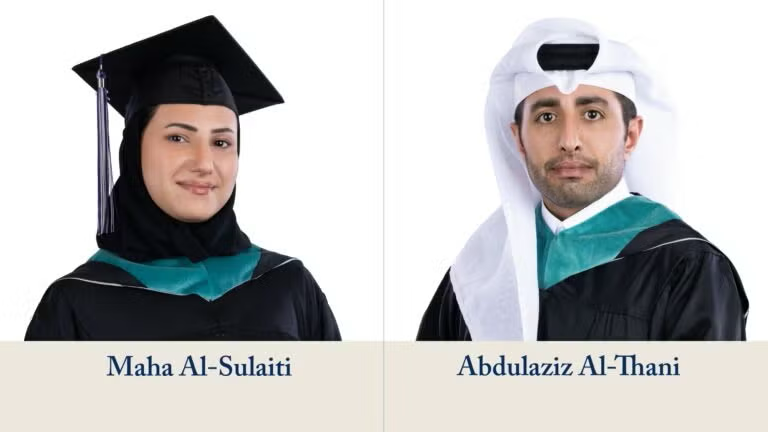
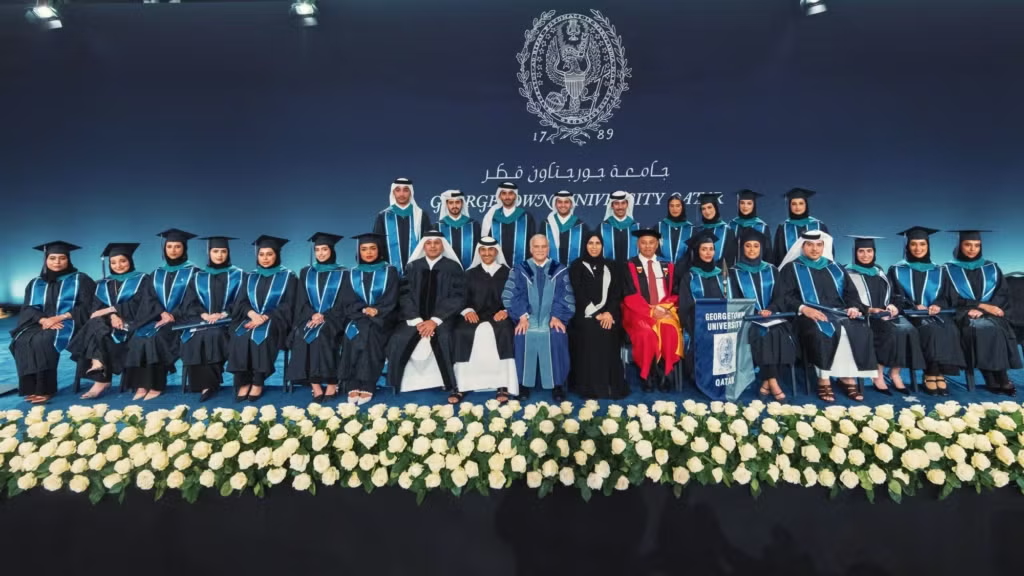
This year, 27 Qatari nationals graduated from the Executive Master’s in Diplomacy and International Affairs (EMDIA) program, bringing its alumni community to nearly 100. They include ministers, diplomats, legal professionals, and policy architects, connected not only by a credential, but by a shared analytical framework and a network that spans some of the country’s most influential institutions.
Two members of this year’s class, Abdulla Al-Sowaidi and Muneera Almuhannadi, offer a closer look at how that training plays out in practice as Qatar navigates an increasingly complex global landscape.
Abdulla Al-Sowaidi, Ministry of Foreign Affairs
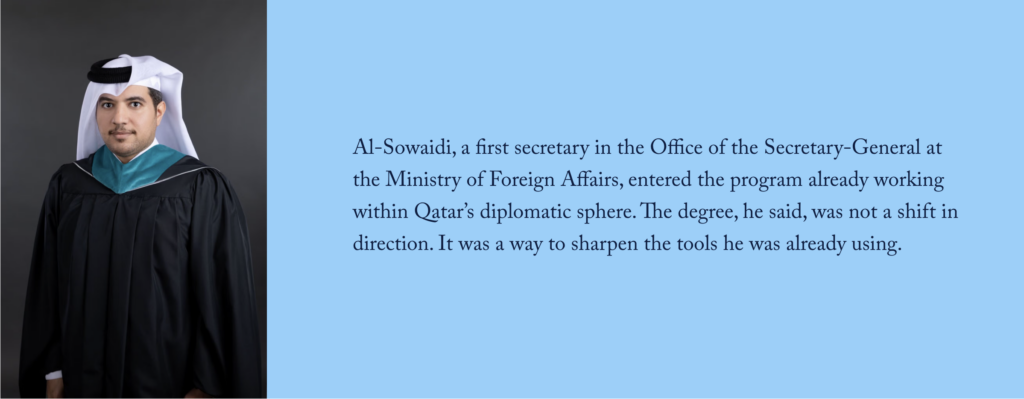
Courses focused on how smaller states exert influence in a system often shaped by larger powers proved especially relevant. Influence, he said, is not built through scale, but through credibility, dialogue, mediation, and strategic partnerships.
“Qatar’s diplomacy reflects this clearly,” Al-Sowaidi said. “It shows how small states can build influence by sustaining dialogue, creating space for mediation, and working through coalitions.”
He said the program’s lasting value was its ability to bridge theory and practice, allowing him to move between political, economic, and strategic frameworks when assessing complex issues. That became especially relevant during a period of heightened regional tension, when professional demands intensified alongside academic commitments.
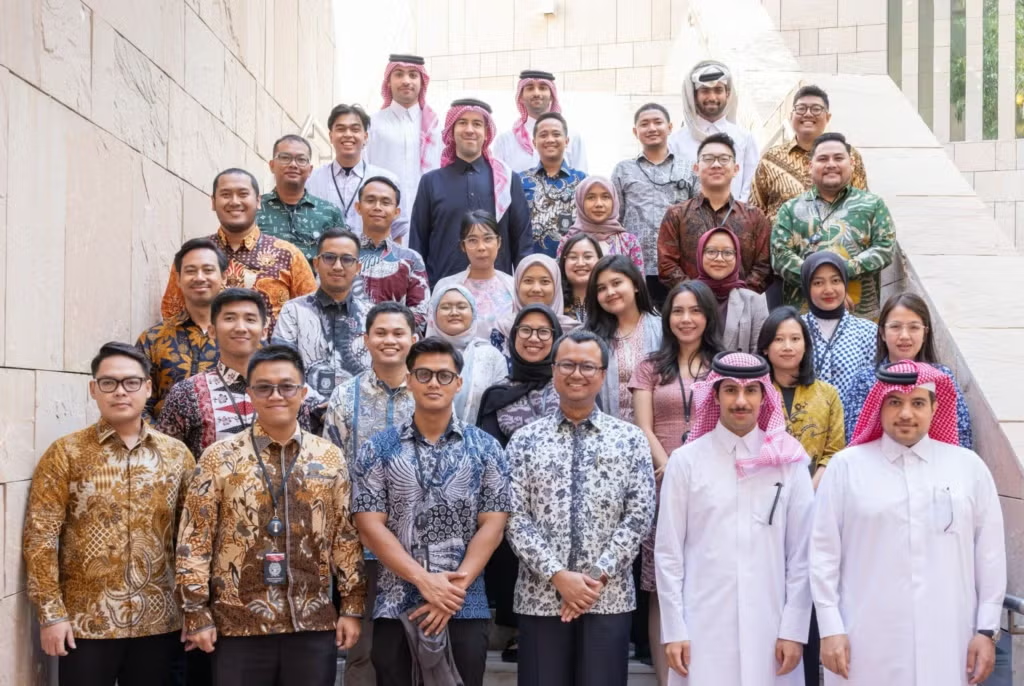
“It required us to balance academic commitments with growing professional responsibilities while remaining mindful of the circumstances around us,” he said. “At the same time, it allowed us to reflect on real-time situations as they were unfolding and connect them to our classroom discussions.”
Muneera Almuhannadi, Qatar Olympic Committee
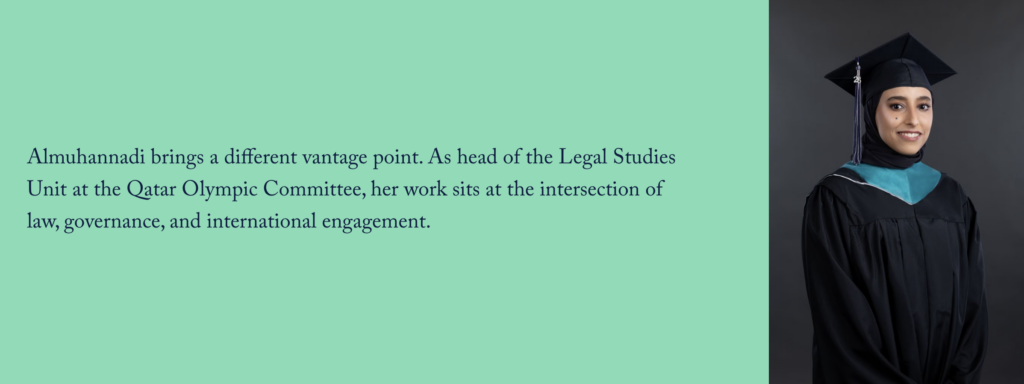
She entered the program with a strong interest in regional tensions and global political dynamics, and said she found the structured academic rigor she was looking for. Like many of her peers, she pointed to coursework on small states as particularly influential, offering practical insight into how countries such as Qatar navigate geopolitical complexity with intention rather than size.
The skill she values most is the ability to analyze state behavior at a higher level, understanding not just what states do, but why they do it.
Beyond the curriculum, she said, the cohort itself became one of the most valuable parts of the experience.
“My colleagues in the program are highly accomplished individuals holding strong positions across various sectors in Qatar,” Almuhannadi said. “The connections formed are both valuable and lasting.”
Taken together, their experiences point to a broader shift. As Qatar continues to expand its diplomatic reach, more of the people shaping that work share a common training, one that blends theory with real-time application and builds networks across institutions.
Class of 2025 Student Testimonials